
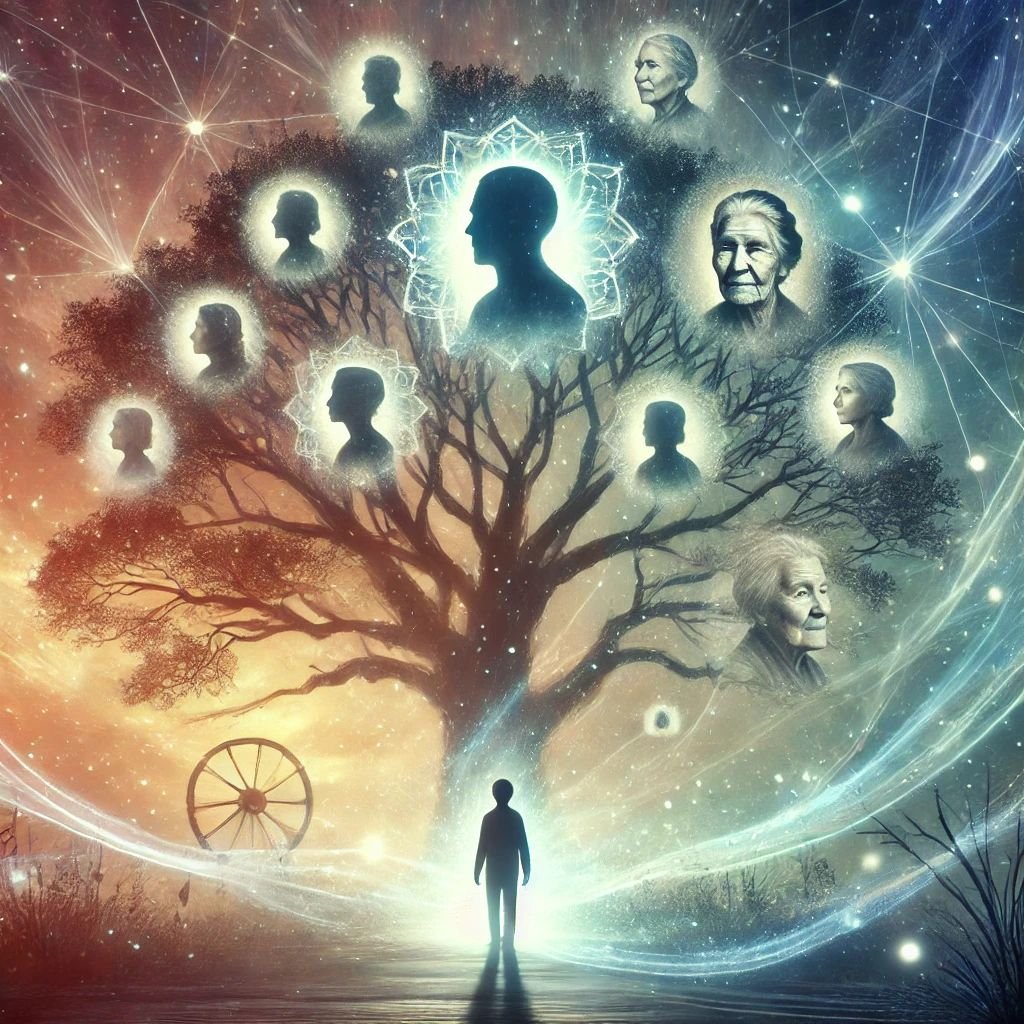
Family memory is one of the fundamental pillars of the intergenerational approach and psychogenetics. It is a collective repository of information, experiences and emotions that is unconsciously transmitted from generation to generation, shaping the lives and choices of descendants. This memory includes not only the conscious memories shared by a family, but also the unspoken secrets, traumas and invisible loyalties that permeate generations.
The Family Legacy and its Influence on our Lives
According to intergenerational theory, each individual is the «keeper» of a family heritage, which subtly - or even visibly - influences his or her decisions, behaviours, beliefs and even health. Significant events experienced by ancestors, such as wars, losses, injustices or successes, leave indelible imprints on family, or cellular, memory, which continue to manifest themselves in later generations, even if the descendants did not directly experience these situations.
The transmission of this memory is not limited to a single dimension; on the contrary, it works through three main axes: biological, psychological and social.
Biological Dimension: Epigenetics and Changes in DNA
Research in the field of epigenetics shows that trauma and intense stressful experiences of ancestors can affect gene expression, causing a predisposition to psychological or physical diseases in offspring. This means that the pain and difficulties of previous generations can literally be imprinted in our DNA, creating an invisible but real influence.
Psychological Dimension: The Unconscious Internalizations
Family memory is also transmitted through parental projections, identifications and subconscious commands. A child, for example, may feel an inexplicable urge to repeat the fate of an ancestor or to carry a burden that does not belong to him or her, simply to maintain family cohesion. Parents, even unintentionally, pass on messages to their offspring about what they «should» follow, often without even realizing it.
Social Dimension: narrative and ritual patterns
Family memory is also transmitted through stories, myths, rituals and relationships, which are passed down from generation to generation. Often, even seemingly random choices in life - such as career, place of residence or relationship preferences - are deeply rooted in family history. A woman who struggles to complete her career plans may find that she unconsciously carries the fate of her great-grandmother, who abandoned her dreams to follow the social imperatives of her time.
Similarly, a man suffering from chronic anxiety disorder may realize that he carries the silent memory of the war traumas experienced by his grandfather, but never spoke about them. Only through acknowledging these invisible ties can he be freed from the burden and find inner peace.
The Power of Recognition and Liberation
The central aim of psychogenetics and systemic reconstructions is to bring to light these invisible loyalties and hidden memories, so that the individual can live his or her own life free from shackles that do not belong to him or her. This process does not mean rejecting or blaming ancestors, but recognizing them with love and respect, while at the same time freeing oneself from predetermined fates.
By recognizing both the forces that allowed the ancestors to overcome difficulties and the difficulties they experienced, the individual can draw from the past the necessary resources, while at the same time breaking free from repetitive patterns. It is a deeply healing process where you honor your family history, but allow yourself to write your own story.
Key Conclusions
✔ Family memory is a complex network of information, experiences and emotions, including secrets, traumas and invisible loyalties that are unconsciously passed down the generations.
✔ Every person is a bearer of a family heritage, which influences their choices, behaviours and even their health.
✔ Intergenerational transmission operates through three dimensions: biological (epigenetic), psychological (unconscious identifications) and social (narratives, myths and family traditions).
✔ The awareness of invisible loyalties and hidden memories helps the individual to liberate himself and live his own life, without rejecting his ancestors but recognizing them with respect.
✔ By honouring the past and recognising both the strengths and difficulties of the ancestors, one can draw on one's intergenerational heritage without being a prisoner of it.
Psychogenalogy and systemic representations offer us the tool to understand and transform our relationship with the family past. Through this process, we become not only spectators of our history, but also creators of our future.
 Greek
Greek  English